The category is broader than the label
A peptide is a chain of amino acids. Different sequences and chemical modifications create different molecules, so the word peptide does not identify a single cosmetic ingredient or effect. Counting the peptides in two products is not enough to compare their performance. First ask which molecules are present and what evidence exists for the finished formulas.
Three examples help make the distinction concrete: the copper-binding tripeptide GHK, the lipid-modified peptide pal-KTTKS, and an acetyl hexapeptide studied under the name Argireline. Their research stories address different preparations and questions. [1, 2, 3]
GHK-Cu: the copper complex
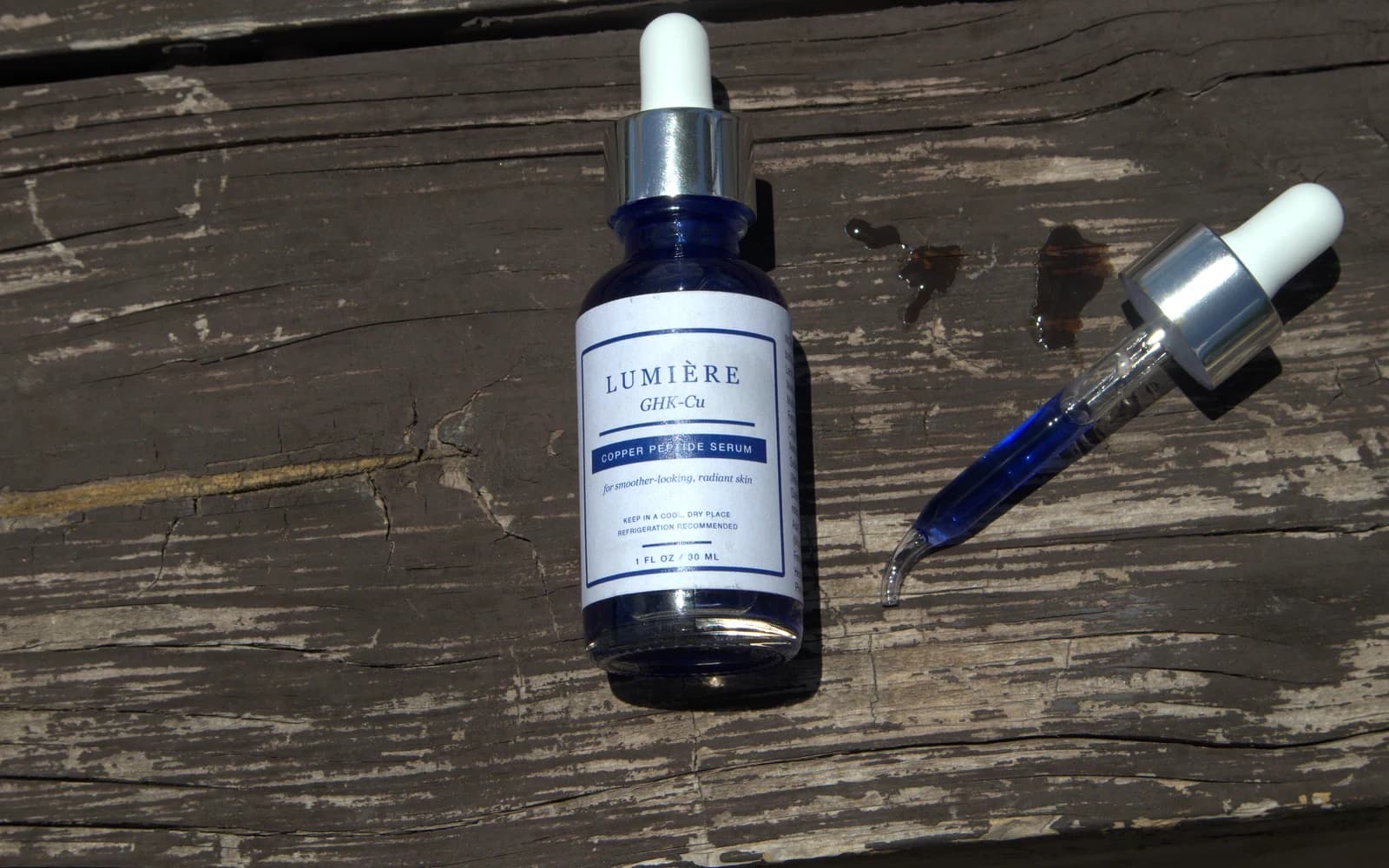
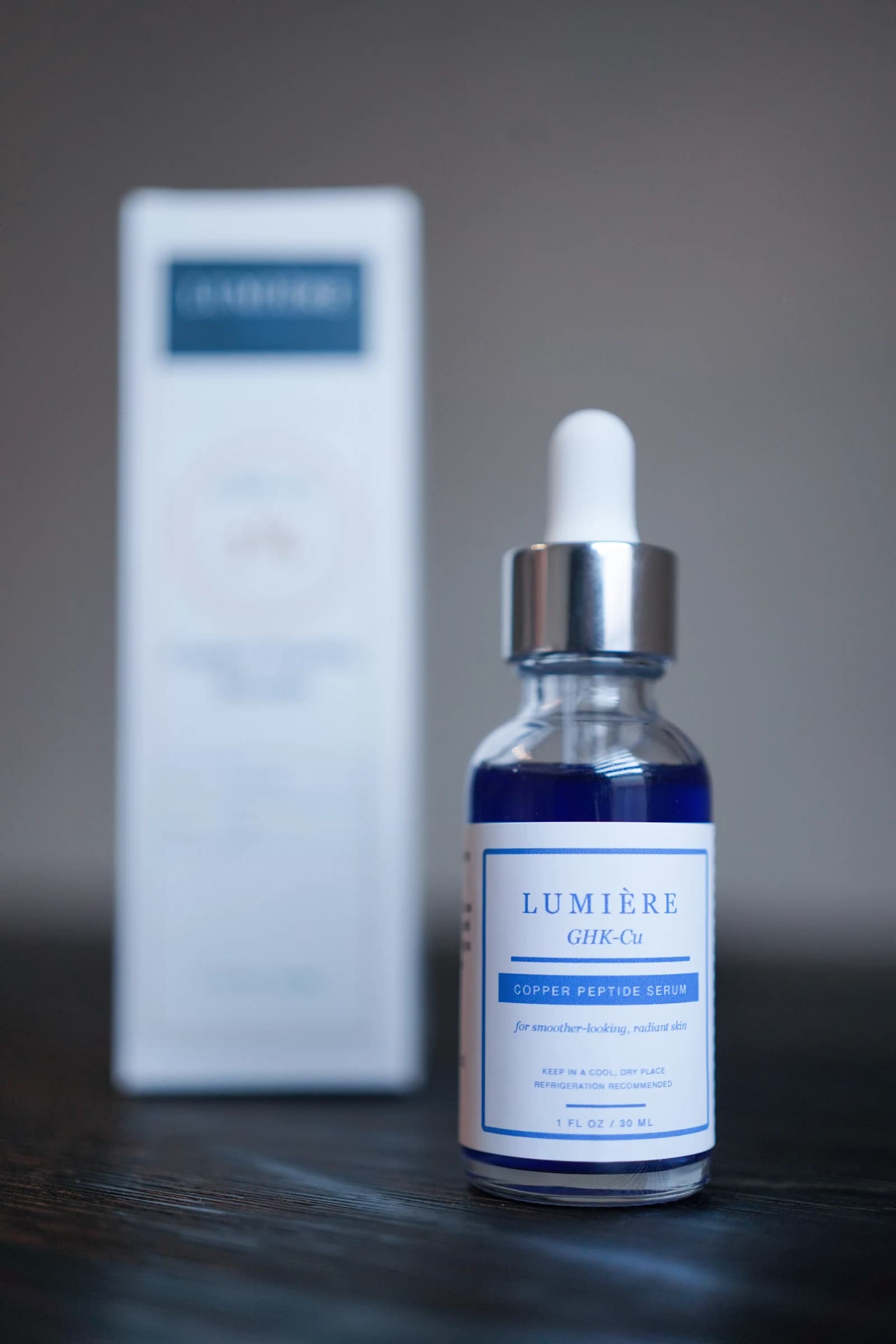
GHK comprises glycine, histidine, and lysine. GHK-Cu refers to its complex with copper. Research into the peptide’s association with copper is central to its identity. This gives it a different chemical starting point from a peptide designed without a metal-binding role. It does not, by itself, show that GHK-Cu is superior to another cosmetic ingredient. [1]
Descriptions such as carrier peptide can be useful shorthand, but they should not be mistaken for proof that a particular bottle transports a measured amount of copper to a target in your skin. That would require evidence about the formulation and the way it is applied.
Pal-KTTKS: a different molecule and a human study
Pal-KTTKS combines a five-amino-acid sequence with a palmitoyl group. Robinson and colleagues reported a 2005 study in 93 women that compared a moisturizer containing this peptide with the same moisturizer without it. The randomized, double-blind, split-face study ran for twelve weeks and reported improvements in assessed fine lines and wrinkles for the peptide-containing formulation. [2]
That is human formulation evidence worth distinguishing from a cell experiment. It still applies to the formula, participants, and conditions studied. It is not proof that every pal-KTTKS product has identical effects, and it cannot establish how that formula compares with Lumiere Routine’s serum.
Acetyl hexapeptides: another research direction
Blanes-Mira and colleagues published a 2002 paper on a synthetic hexapeptide called Argireline. The investigation included a proposed mechanism involving machinery used in neurotransmitter release and an evaluation of a topical preparation. That is a different experimental direction from GHK-Cu’s copper-related chemistry. [3]
A laboratory mechanism should not be translated into equivalence with an injectable procedure. The route of application, preparation, and evidence would need to support any such comparison. The point of this example is to show how much can differ within the peptide category, not to rank procedures or products.
Compare products with the same questions
Look for the full ingredient list, clear directions, relevant tolerability information, and an explanation of any performance test. If a study is cited, ask whether its formula matches the product and whether its outcome matches the claim being made. A higher percentage is not enough information when the underlying materials or measurement conventions differ.
A fair superiority claim would need an appropriate direct comparison. Studies run with different formulas, participants, methods, and durations cannot be combined into a simple league table. Until comparable evidence is available, consider each formula on its own terms. Its ingredient identity, practical fit, and documented testing provide a more useful basis for a choice than a contest between peptide names.
Sources & further reading
- 1. [1] Pickart L et al. Growth-modulating plasma tripeptide may function by facilitating copper uptake into cells. Nature, 1980. ↗
- 2. [2] Robinson LR, Fitzgerald NC, Doughty DG, Dawes NC, Berge CA, Bissett DL. Topical palmitoyl pentapeptide provides improvement in photoaged human facial skin. International Journal of Cosmetic Science, 2005. ↗
- 3. [3] Blanes-Mira C et al. A synthetic hexapeptide (Argireline) with antiwrinkle activity. International Journal of Cosmetic Science, 2002. ↗
Meet the serum.
Explore the GHK-Cu Copper Peptide Serum, with product details, care guidance and current availability.
Discover the serum ↗